Design Subscription vs In-House Designer: The Real Cost in 2026
Compare design subscription vs in-house designer costs in 2026. See why DesignSlave at $500/month may suit startups needing ongoing graphic design.
TL;DR: Hiring an in-house designer gives you a dedicated team member, but the real cost goes far beyond salary. In 2026, a US graphic designer can cost roughly $7,000 per month when benefits are included, before software, recruiting, and management time. A design subscription like DesignSlave costs $500 per month for unlimited requests and revisions, making it a practical alternative for startups and small businesses that need consistent design work without another full-time hire.
Design Subscription vs In-House Designer: Why the Comparison Matters
Your startup needs better marketing graphics. Your website needs updates. Sales wants a new presentation, and someone just remembered that the email campaign launches tomorrow.
Suddenly, design is not an occasional task. It is a recurring business expense.
At this point, you have two options worth considering: hire an in-house graphic designer or use a design subscription.
Both approaches can work. The right choice depends on how much design work you need, how quickly you need it, and whether you need someone embedded in your company every day.
The tricky part is comparing the actual costs rather than looking at a salary and a subscription fee side by side. One includes an employee. The other provides an ongoing design service. They solve overlapping problems, but they are not identical.
Let’s break down the numbers.
What Does an In-House Graphic Designer Really Cost in 2026?
An in-house designer might look affordable when you focus only on their annual salary. However, employers pay more than the number printed on a job offer.
According to the US Bureau of Labor Statistics, the median annual wage for graphic designers was $58,910 in May 2023. That figure provides a useful benchmark, although it is historical wage data rather than a current 2026 salary survey.
Once you include employee benefits, the cost increases significantly.
The real cost of hiring a designer
Using the verified figures for this comparison, employee benefits make up roughly 30% of total compensation, which means the salary itself is only about 70% of what an employer actually pays.
Here is how that works:
Annual salary: $58,910
Estimated benefits (about 30% of total compensation): about $25,300
Total annual compensation cost: about $84,200
That works out to approximately $84,200 per year, or about $7,000 per month, before software, recruiting, and management time. The precise amount will vary by employer, benefits package, and location.
Even so, the takeaway is clear: the salary alone does not tell you what hiring a designer will cost.
Costs beyond salary and benefits
Your company may also need to account for:
- Recruiting and onboarding: Writing job descriptions, reviewing portfolios, interviewing candidates, and getting a new employee up to speed all consume time and resources.
- Design software and equipment: Your designer needs appropriate tools, hardware, and access to company systems. Check your actual requirements before estimating this expense.
- Management time: Someone must assign projects, explain business goals, review work, and coordinate priorities. That person may be a founder, marketing manager, or creative director.
- Paid time off and availability: Your employee will have holidays, leave, and other periods when they cannot work. This is normal, but it affects how you plan production.
- Workload fluctuations: Your business may need 40 design tasks one month and considerably fewer the next. An employee’s salary continues regardless of how much design work you have ready.
None of these expenses automatically makes hiring a bad decision. They simply belong in the calculation.
What Does a Design Subscription Cost?
A design subscription offers an alternative to employing a designer directly.
Instead of paying a salary and managing an employee, you pay a recurring fee for access to a design service. You submit requests, provide feedback, and receive completed work according to the service’s process.
DesignSlave costs $500 per month.
The subscription includes unlimited design requests and revisions, with most requests delivered within 24 to 48 hours. You can also pause or cancel anytime.
That gives startups a predictable monthly expense without committing to a full-time employee.
Design subscription vs in-house designer: The numbers
Let’s compare the estimated monthly costs using the verified figures.
| Expense | In-house designer | DesignSlave subscription |
|---|---|---|
| Base monthly salary equivalent | About $4,909 | Included |
| Estimated total employment cost | About $7,000/month | $500/month |
| Software and equipment | Additional | Depends on your existing setup and service scope |
| Recruiting | Additional | No employee recruitment required |
| Management | Additional time required | Requests and feedback still require your time |
| Design requests | Based on employee capacity | Unlimited requests |
| Revisions | Depends on your workflow | Unlimited revisions |
| Flexibility | Employment commitment | Pause or cancel anytime |
The subscription costs $6,000 over 12 months if you maintain it continuously.
By comparison, the estimated $84,200 annual employment cost is substantially higher. The difference is approximately $78,200 per year before accounting for the additional costs of recruiting, software, equipment, and management.
That is a meaningful gap for a startup watching every dollar.
However, this is not a perfect like-for-like comparison. An in-house designer is a dedicated employee who can attend meetings, collaborate across departments, and take ownership of broader design responsibilities. A subscription is a design service with its own workflow and capacity limits.
The savings matter, but so does what your business actually needs.
What Do You Get With Each Option?
Price is only one part of the decision. You also need to understand how each option fits into your day-to-day operations.
The advantages of an in-house designer
An in-house designer works inside your organization and can develop a deep understanding of your products, customers, and internal processes.
This arrangement is especially useful when design requires constant collaboration.
For example, a product team might need a designer to join daily discussions, explore interface changes, build prototypes, and work directly with developers. A marketing department might need someone to manage an evolving brand system across multiple teams.
An employee can also take ownership of long-term creative direction, depending on their experience and role.
The trade-off is that you are paying for the entire employment relationship, including periods when the design workload is light.
The advantages of a design subscription
A subscription is particularly attractive when your business needs a steady stream of design deliverables but does not need a designer sitting inside the company all day.
Typical requests might include:
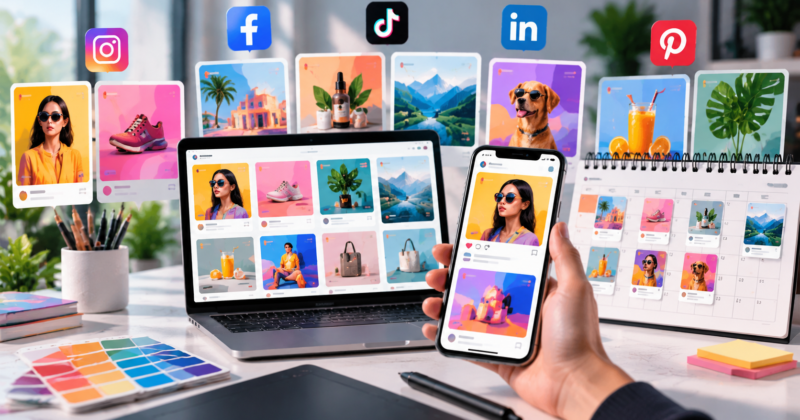
- Social media posts and advertising creatives.
- Website graphics and promotional banners.
- Email marketing visuals.
- Sales presentations and pitch decks.
- Marketing collateral and campaign assets.
- Updates to existing creative materials.
Instead of hiring someone for a fixed monthly salary, you submit work as needed and manage priorities through the service’s process.
For a small team, this can reduce the operational burden of recruiting and employing another person.
It also makes budgeting easier because you know the subscription fee in advance.
Still, unlimited requests do not mean unlimited simultaneous production. Work moves through a delivery workflow, and actual throughput depends on complexity, priorities, and how many tasks can be handled at once.
If you want to understand the model in more detail, read our guide to what an unlimited graphic design subscription is.
When Should You Hire In-House Instead?
A design subscription is not automatically the right answer for every company.
Hiring in-house can make sense when design is central to your product or competitive advantage.
You need daily collaboration
If your designer must participate in product meetings, work closely with engineers, and make rapid decisions alongside other employees, an internal role may be the better fit.
You need specialized product design
Some companies require extensive UX research, interaction design, prototyping, accessibility testing, or design-system ownership. These responsibilities may call for a dedicated product designer rather than a general graphic design service.
You have a consistently heavy workload
If your company needs a designer working on complex projects throughout every business day, an employee could provide the dedicated attention you need.
You need long-term creative leadership
A senior design hire may establish brand standards, mentor other designers, direct creative strategy, and coordinate work across departments. A subscription should not be assumed to replace all those responsibilities.
The question is not whether an employee is more valuable than a subscription. It is whether the additional cost buys capabilities your company genuinely needs.
When Does a Design Subscription Make More Sense?
For many startups and small businesses, the design workload is real but does not justify a full-time employee.
That is where a subscription can be useful.
Your marketing team needs regular creative assets
If your team constantly produces ads, social posts, website banners, and sales materials, a subscription provides a repeatable way to request work.
You can keep campaigns moving without opening a new recruitment process.
You need predictable costs
Founders have enough financial surprises already. A fixed $500 monthly subscription makes design spending easier to plan than adding a new salary and employment expenses.
It also lets you evaluate the service against the actual volume and value of your design requests.
Your workload changes throughout the year
A business may need a large volume of creative work before a launch, followed by a quieter period.
DesignSlave lets you pause or cancel anytime, which gives you more flexibility than maintaining a permanent employee for a fluctuating workload.
You want to avoid recruitment and employee administration
Not every small business wants to spend time interviewing candidates, onboarding employees, and managing another role.
A subscription offers a simpler arrangement for businesses that already know what they need designed and can provide clear briefs and feedback.
For more context on the business case, explore our article about how an unlimited design subscription can help startups.
How to Choose the Right Option for Your Business
Before deciding, answer four practical questions.
1. How much design work do you actually have?
Review the last two or three months. Count your ad creatives, social posts, presentations, website graphics, and other recurring requests. This gives you a more realistic view than guessing how busy a designer might be.
2. Does the work require someone inside your company?
If most tasks involve producing marketing assets from a clear brief, an external design service may work well. If the role requires daily collaboration, product research, and strategic ownership, hiring may be justified.
3. How important is delivery speed?
DesignSlave reports that most requests arrive within 24 to 48 hours. That can suit recurring marketing work, but it does not guarantee every complex project will finish within that window. Clarify your deadlines and production needs before choosing.
4. What does the total cost buy you?
Compare more than monthly fees. Consider employee responsibilities, recruitment, benefits, management, workflow, and the type of work you need. Also check the subscription’s current terms and scope before relying on it for specialized deliverables.
If you need an embedded creative partner for product development, hire accordingly. If you mainly need consistent marketing design without the cost of a full-time employee, a subscription deserves serious consideration.
Frequently Asked Questions
Is a design subscription cheaper than hiring an in-house designer?
Using the verified estimates, DesignSlave costs $500 per month, compared with approximately $7,000 per month for the broader in-house employment-cost benchmark. The subscription is considerably less expensive, although the two options do not provide identical responsibilities or working arrangements.
Does DesignSlave include unlimited revisions?
Yes. DesignSlave’s $500 monthly subscription includes unlimited design requests and revisions. Most requests are delivered within 24 to 48 hours, although timing depends on the work involved and the service’s workflow.
Can a design subscription replace a full-time designer?
It can replace some of the recurring graphic design work a full-time employee would handle, particularly marketing assets and promotional materials. It may not replace a dedicated employee responsible for product design, research, daily collaboration, or creative leadership.
Can I cancel a design subscription if my workload decreases?
DesignSlave allows you to pause or cancel anytime. This flexibility can be helpful for startups with seasonal campaigns or changing budgets. Review the current subscription terms before signing up.
Final Verdict: Pay for the Design Capacity You Actually Need
The real choice in the design subscription vs in-house designer debate is not simply $500 versus $7,000. It is whether your business needs a dedicated employee or a flexible way to get recurring design work completed.
An in-house designer can be worth the investment when you need continuous collaboration, specialized expertise, and long-term creative ownership.
However, if your priority is consistent marketing design without the cost and administration of a full-time hire, a subscription may be the more practical option.
DesignSlave costs $500 per month, includes unlimited requests and revisions, and lets you pause or cancel anytime. For startups that need dependable creative production without adding another employee to payroll, that is a compelling place to start.
Ready to simplify your design workflow? Visit DesignSlave to explore the subscription and see whether it fits your business.